
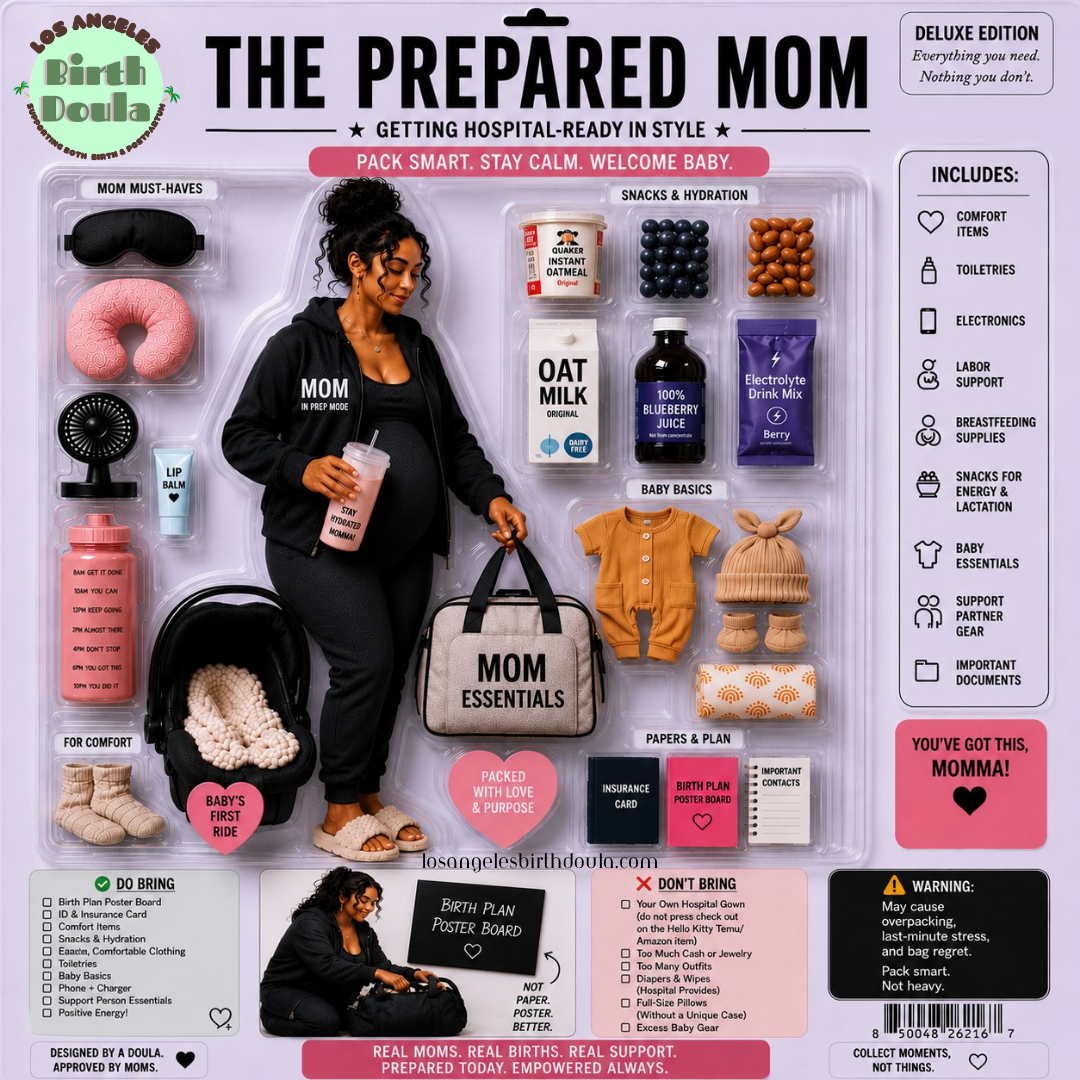
Important Documents
• Photo ID
• Insurance card
• Hospital pre-registration paperwork (if applicable)
• Birth Board (If we’ve created one together.) Rather than a traditional paper birth plan, your preferences are organized on a large, easy-to-read Birth Board that can be displayed in your labor room, allowing your healthcare team to quickly review your birth preferences throughout labor and delivery.
• Pediatrician’s contact information
• Emergency contact list
Clothing
• Comfortable outfit to wear home
• Nursing bra or supportive bra
• Loose pajamas (button-front if breastfeeding)
• Comfortable underwear (high-waisted if having a cesarean)
• Warm socks
• Slippers or non-slip sandals
• Flip-flops for the shower
• Lightweight robe
Toiletries
• Toothbrush and toothpaste
• Hairbrush or comb
• Hair ties or scrunchies
• Deodorant
• Shampoo and conditioner
• Body wash
• Face wash
• Lip balm
• Lotion
• Glasses and case (if applicable)
• Contact lenses and supplies
• Dry shampoo (optional)
Comfort Items
• Pillow from home (with a brightly colored pillowcase)
• Blanket (optional)
• Eye mask
• Earplugs or noise-canceling headphones
• Heating pad (if approved by your healthcare team)
• Tennis balls or massage ball for labor
• Essential oils (if your hospital allows them)
• Small portable fan
• Battery-operated candles (if permitted)
Electronics
• Cell phone
• Long (6–10 foot) charging cable
• Portable battery pack
• Camera (optional)
• Bluetooth speaker (optional)
Labor Comfort
• Water bottle with straw
• Sugar-free hard candy
• Gum
• Lip balm
• Cooling facial wipes
• Labor affirmation cards
• Birth playlist
Snacks
Hospital policies on eating and drinking during labor vary. Depending on your medical condition, labor progress, planned anesthesia, or your provider’s recommendations, you may be allowed a regular diet, clear liquids only, or be placed on a fully liquid diet. Always follow your healthcare team’s guidance.
General Labor & Recovery Snacks
• Protein bars
• Trail mix
• Crackers
• Electrolyte drinks
• Applesauce pouches
• Dried fruit
• Nuts
• Jerky
• Granola bars
Lactation-Supportive Snacks
Many mothers like to pack foods that contain nutrients commonly associated with supporting milk production, especially during the first few days after birth.
• Instant oatmeal packets
• Overnight oats
• Oat-based granola bars
• Fresh blueberries
• Dried blueberries
• Almonds
• Walnuts
• Cashews
• Trail mix with oats, nuts, and dried fruit
• Nut butter packets
• Lactation cookies or lactation bites (optional)
If You Are Placed on a Fully Liquid Diet
If your healthcare team places you on a fully liquid diet and allows outside beverages, you may consider bringing:
• Oat milk
• 100% blueberry juice
• An oat milk and blueberry juice combination
• Clear electrolyte drinks
• Clear broth (if permitted)
• Meal replacement shakes (if approved by your healthcare team)
Breastfeeding Supplies
• Nursing pillow (optional)
• Nipple cream
• Breast pads
• Hands-free pumping bra (if pumping is anticipated)
Baby
• Approved infant car seat (installed before delivery)
• Going-home outfit
• Hat (optional if the hospital does not provide one)
• Mittens (optional)
• Light blanket
• Baby announcement outfit (optional)
Support Person
• Change of clothes
• Toiletries
• Jacket or sweatshirt (hospital rooms are often cool)
• Snacks
• Water bottle
• Phone charger
• Pillow and blanket
• Entertainment (book, tablet, etc.)
If You Are Having a Scheduled Cesarean
• High-waisted underwear
• Loose maternity leggings or pants
• Abdominal support binder (if recommended by your healthcare provider)
• Slip-on shoes
• Small pillow to place between your abdomen and the seatbelt during the ride home
Items You Usually Do Not Need to Bring
Most hospitals already provide:
• Hospital gowns
• Mesh postpartum underwear
• Large maternity pads
• Peri bottle
• Ice packs
• Disposable diapers
• Baby wipes
• Baby blankets
• Baby hats
• Baby shirts
• Formula (if needed)
• Bulb syringe
• Basic postpartum medications
• Disposable sitz bath supplies (at many hospitals)
Items to Leave at Home
• Your own hospital gown. Hospital gowns are specifically designed to allow easy access for fetal monitoring, IV placement, epidurals, blood pressure checks, breastfeeding, skin-to-skin contact, and emergency procedures. They are also much easier to replace if they become wet or soiled during labor and birth. (And yes—don’t press checkout on that cute Hello Kitty hospital gown from Temu or Amazon! )
• Large amounts of cash
• Expensive jewelry
• Multiple suitcases
• Hair styling tools
• Full makeup kits (bring only the essentials if desired)
• Too many newborn outfits (one or two is usually plenty)
• Diapers and wipes (unless your hospital specifically requests them)
• Full-size pillows without a distinctive pillowcase
• Excessive baby gear such as swings, loungers, or bouncers
Doula Tip
Aim to pack one medium-sized suitcase, one small labor bag, and your baby’s diaper bag. Pack your bag between 35–37 weeks of pregnancy so you’re ready if labor begins earlier than expected. Keep your bag near the door or in your vehicle, and remember to install your baby’s car seat before labor begins.
If you’re a Los Angeles Birth Doula client, don’t forget your personalized Birth Board! Unlike a traditional paper birth plan, your Birth Board provides a large, easy-to-read visual guide for your healthcare team. It allows nurses, midwives, physicians, and support people to quickly understand your preferences at a glance so you can focus on labor instead of repeating your wishes.
The goal isn’t to bring everything you own—it’s to pack intentionally. A well-packed hospital bag helps you stay comfortable, organized, and prepared while allowing your healthcare team easy access to provide the best care possible.


